
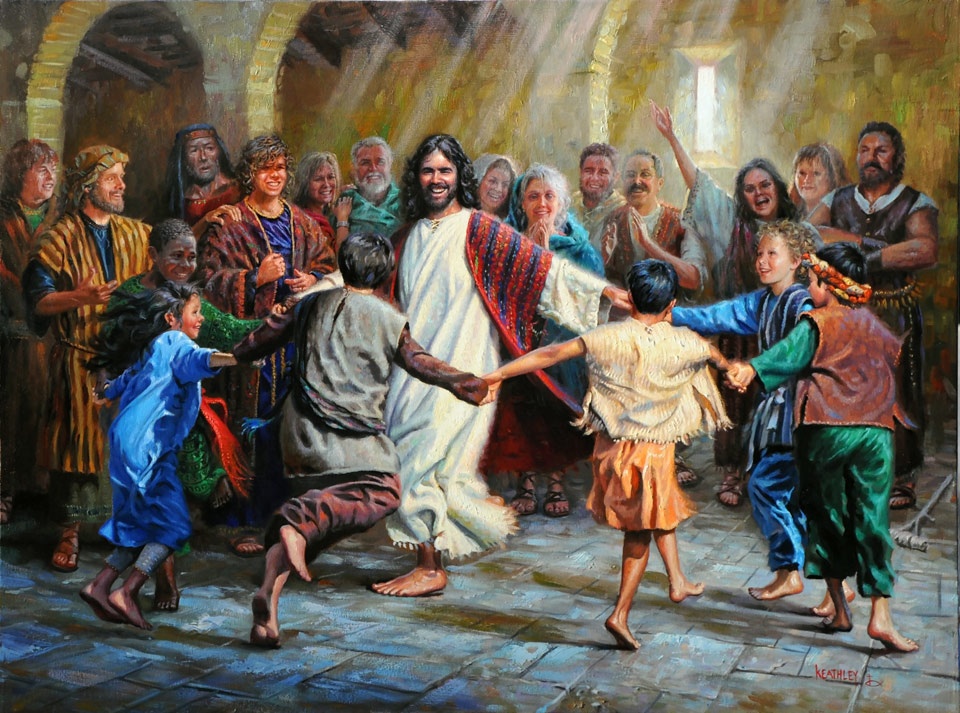
Have you ever wondered if Jesus danced in the Bible? This intriguing question has sparked debate and curiosity among scholars and believers for centuries. In this blog post, we will explore the different perspectives and interpretations surrounding the topic, shedding light on a lesser-known aspect of Jesus’ life and teachings.
By delving into whether Jesus danced in the Bible, we have the opportunity to gain a deeper understanding of his character and message. Exploring this topic can provide insight into the cultural context of the time and shed light on the significance of movement and expression in spiritual practices. Join us on this fascinating journey as we uncover the potential implications of Jesus dancing in the Bible and what it means for our own faith and worship practices today.
Exploring the Possibility: Did Jesus Engage in Dance in the Bible?
Did Jesus Dance in the Bible?
The question of whether Jesus danced in the Bible is a topic of much debate and interpretation among biblical scholars and theologians. While the Bible does not explicitly mention Jesus dancing, there are a few instances where dancing is mentioned in relation to religious or cultural events during Jesus’ time.
One of the most well-known references to dancing in the Bible is found in the Old Testament, specifically in the book of Psalms. In Psalm 149:3, it says, “Let them praise his name with dancing,” indicating that dancing was indeed a form of worship and praise in ancient Hebrew culture.
In the New Testament, dancing is also referenced in the Gospel of Matthew when John the Baptist is described as neither eating nor drinking. This passage is often interpreted as a reference to John living an ascetic lifestyle, which may have included abstaining from celebratory activities like dancing.
While there may not be explicit references to Jesus dancing in the Bible, there are instances where Jesus participated in joyful gatherings and celebrations. For example, in the Gospel of Luke, Jesus attends a wedding feast in Cana where he performs his first miracle by turning water into wine. It is not a stretch to imagine that dancing may have been part of the festivities at a wedding celebration during that time.
Additionally, Jesus is often depicted as someone who enjoyed spending time with people, dining with sinners and tax collectors, and engaging in conversations with a wide range of individuals. It is not difficult to envision Jesus participating in cultural practices like dancing as a way to connect with others and express joy and celebration.
Ultimately, whether or not Jesus danced in the Bible is a matter of interpretation and speculation. While there is no direct evidence to support the idea that Jesus danced, the overall portrayal of Jesus as someone who embraced life, joy, and community suggests that dancing would not have been out of character for him.
Does God dance in the Bible?
There is a verse in the Bible that mentions God dancing. In 2 Samuel 6:14, it says, “And David danced before the Lord with all his might.” This verse describes King David dancing and celebrating before the Lord as the Ark of the Covenant was being brought to Jerusalem. While the verse specifically talks about David dancing, some interpret it as a moment of joy and reverence that could also be associated with God’s presence. So while it doesn’t explicitly say that God dances, this verse is often used to suggest the idea that God rejoices alongside His people in moments of celebration.
What does the Bible say about dancing?
The Bible does mention dancing in several places. In some instances, dancing is portrayed in a positive light as a form of celebration and worship. For example, in the book of Psalms, we find verses like Psalm 149:3 which says, “Let them praise his name with dancing and make music to him with timbrel and harp.” And in Ecclesiastes 3:4, it says, “a time to weep and a time to laugh, a time to mourn and a time to dance.”
However, there are also instances where dancing is associated with sinful behavior. For example, in the story of the golden calf in Exodus 32, the Israelites engaged in idolatrous dancing which led to their disobedience to God. Additionally, in the New Testament, John the Baptist was beheaded because of a dance performed by Herodias’ daughter in Matthew 14:6-12.
Overall, the Bible does not explicitly condemn dancing itself, but rather the context and intentions behind it. It is important to discern whether the dancing is done in a way that glorifies God or leads to sin and temptation.
Why is Jesus called the Lord of the dance?
Jesus is often referred to as the “Lord of the dance” in the context of the Bible because of his role as a central figure in Christianity who brings joy, celebration, and freedom. This title is based on interpretations of various Bible verses that describe Jesus’ ministry and interactions with people as occasions for rejoicing and expressing praise through dance and music.
One key passage that influences this imagery is found in Psalm 30:11, which says, “You turned my wailing into dancing; you removed my sackcloth and clothed me with joy.” This verse emphasizes the transformative power of God to bring about joy and renewal in the lives of believers, symbolized by the act of dancing.
Additionally, in the New Testament, Jesus is portrayed as someone who celebrated with others, such as at the wedding in Cana where he performed his first miracle by turning water into wine (John 2:1-11). This event is often seen as a sign of Jesus’ presence bringing abundance and joy to the occasion.
Overall, calling Jesus the “Lord of the dance” highlights his ability to bring vitality, celebration, and freedom to those who follow him, and it reflects the joyful nature of the Christian faith.
Who danced for Jesus in the Bible?
In the Bible, King David danced for Jesus. In 2 Samuel 6:14, it says “And David danced before the Lord with all his might.” This is a famous example of someone dancing in worship to God in the Bible.