
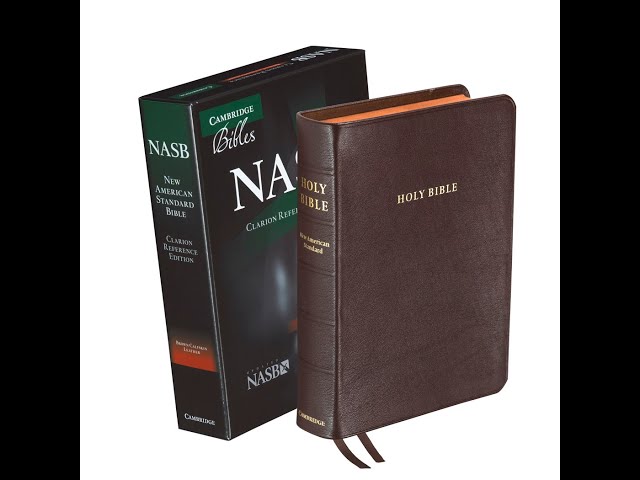
Are you searching for a reliable Bible translation that accurately conveys the original text while staying true to its intended meaning? In the vast sea of Bible versions available today, it can be difficult to discern which one is best suited for your spiritual journey. In this blog post, we will explore the question: What’s wrong with the NASB Bible? By addressing potential drawbacks and limitations of the NASB translation, readers can gain a deeper understanding of its benefits and drawbacks.
While the NASB Bible is highly regarded for its literal and precise rendering of the original Hebrew, Aramaic, and Greek texts, it may also have certain shortcomings that impact readability and ease of comprehension. By examining these potential pitfalls, readers can make an informed decision about whether the NASB Bible aligns with their personal study preferences and goals. Join us as we delve into the nuances of the NASB translation, uncovering both its strengths and areas where it may fall short in delivering the Word of God effectively.
The NASB Bible: Unpacking Its Controversies and Criticisms
The New American Standard Bible (NASB) is a popular translation that aims to provide a word-for-word rendering of the original Hebrew, Aramaic, and Greek texts of the Bible. While the NASB is known for its accuracy and faithfulness to the original languages, there are some criticisms and concerns that have been raised about this translation.
1. Formal equivalence may hinder readability: The NASB’s commitment to formal equivalence, or translating each word as literally as possible, can sometimes result in awkward phrasing and difficult-to-understand sentences. This can make it challenging for readers, especially those who are new to the Bible or have limited language proficiency, to engage with and comprehend the text effectively.
2. Lack of gender-inclusive language: The NASB often retains gender-specific language from the original texts, using words like “man” or “brothers” instead of more inclusive terms like “people” or “siblings.” This can be seen as a limitation in today’s context, where there is a growing emphasis on gender equality and inclusivity in language.
3. Limited use of footnotes and annotations: Unlike some other translations that provide extensive footnotes and annotations to explain difficult passages or offer alternative interpretations, the NASB tends to have fewer additional notes. This can be a drawback for readers looking for more guidance or context in understanding the text.
4. Interpretation of certain passages: Some critics argue that the NASB’s translation choices in certain passages reflect a particular theological bias or interpretation. This can lead to debates over the accuracy and faithfulness of the translation, as well as how certain key theological concepts are presented to readers.
5. Lack of poetic beauty: While the NASB excels in accuracy and precision, some readers find that it lacks the poetic beauty and literary flair present in other translations. The focus on literal translation may come at the expense of capturing the emotional depth and symbolic richness of the original texts, which can affect the overall aesthetic appeal and impact of the Bible.
In conclusion, while the NASB is praised for its accuracy and fidelity to the original languages of the Bible, it also faces criticisms related to readability, inclusivity, annotations, interpretative choices, and poetic expression. These concerns highlight the complex balance between accuracy and accessibility in Bible translations, and call for a nuanced evaluation of the strengths and weaknesses of the NASB in fulfilling the diverse needs of readers and communities.
Is the NASB version of the Bible accurate?
The NASB (New American Standard Bible) version of the Bible is known for its accuracy and literal translation approach. It is often praised for its faithfulness to the original languages of the Biblical text, particularly Hebrew and Greek. Many scholars and theologians consider the NASB to be a reliable translation for in-depth study and exegetical purposes due to its commitment to preserving the nuanced meanings of the original texts. However, like any translation, there may be interpretative choices made that could vary in accuracy. Overall, the NASB is regarded as a solid translation that can be relied upon for serious study and examination of the scriptures.
What religion uses NASB Bible?
NASB Bible is primarily used by Protestant Christians. It is known for its literal translation approach, which aims to accurately represent the original languages of the Bible. The New American Standard Bible is often preferred for its word-for-word rendering of the biblical text, making it a popular choice for scholars, pastors, and those seeking a more literal interpretation of the Scriptures.
Which version of the Bible is considered the most accurate translation?
The question of which version of the Bible is considered the most accurate translation is a complex and debated topic among scholars and theologians. Many consider the New American Standard Bible (NASB) to be one of the most accurate translations available due to its commitment to translating the original Hebrew, Aramaic, and Greek texts as literally as possible while still maintaining readability in English. The English Standard Version (ESV) is another translation that is highly regarded for its accuracy and readability, as it seeks to capture the precise wording of the original texts.
It’s important to note that no translation is perfect, as each translator and translation team brings their own interpretations and biases to the text. Ultimately, the choice of which Bible translation to use should depend on personal preference, the purpose of study, and consultation with trusted religious leaders or scholars.
What is the most controversial translation of the Bible?
The most controversial translation of the Bible is arguably The New World Translation (NWT) used by Jehovah’s Witnesses. This translation has faced criticism for its renderings of certain key passages, such as John 1:1, and for allegedly being influenced by the theological beliefs of the Jehovah’s Witnesses organization. The NWT is seen by some as deviating from traditional translations in ways that reflect a particular doctrinal bias.