
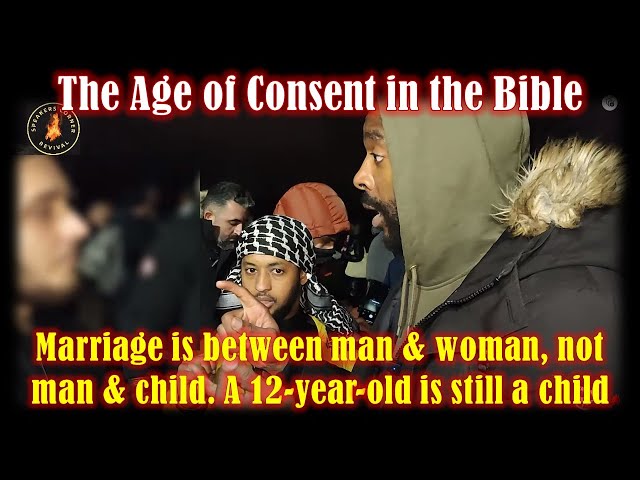
Have you ever wondered about the concept of age of consent in the Bible? Understanding this topic can provide valuable insights into the cultural and historical context of ancient societies, as well as shed light on contemporary discussions surrounding ethics and relationships. In this blog post, we will explore what the Bible has to say about the age of consent and its implications for modern interpretations.
By delving into the age of consent in the Bible, we can gain a deeper understanding of how notions of maturity, responsibility, and morality have evolved over time. This exploration can help us navigate complex issues related to relationships, sexuality, and ethics, offering a unique perspective informed by biblical teachings. Join us as we uncover the significance of age of consent in the Bible and its relevance to our lives today.
The Age of Consent in the Bible: Exploring the Boundaries of Moral Responsibility
What is the Age of Consent in the Bible
In the Bible, the concept of “age of consent” as understood in modern legal terms does not have a direct equivalent. However, there are certain principles and guidelines regarding marriage and sexual relations that can be found in biblical texts.
One of the key passages that is often cited in discussions about age of consent in the Bible is found in the Old Testament book of Leviticus. Leviticus 18:6 states, “None of you shall approach any one of his close relatives to uncover nakedness; I am the Lord.” This verse is part of a larger section that outlines various prohibitions on sexual relations, including incest and adultery.
Another relevant passage is found in the New Testament book of 1 Corinthians. In 1 Corinthians 7:36-38, the apostle Paul discusses the topic of marriage and states, “If anyone thinks that he is not behaving properly toward his betrothed, if his passions are strong, and it has to be, let him do as he wishes: let them marry—it is no sin.” While this passage does not explicitly mention an age of consent, it can be interpreted as emphasizing the importance of mutual consent and readiness for marriage.
It is important to note that biblical practices and cultural norms regarding marriage and relationships were different in ancient times compared to contemporary standards. In many societies during biblical times, individuals were often married at a much younger age than is common today.
Ultimately, when considering the concept of age of consent in the Bible, it is essential to approach the text with an understanding of the historical and cultural context in which it was written. The principles and teachings found in the Bible can provide guidance on issues related to relationships and morality, but it is crucial to interpret them thoughtfully and in light of contemporary understandings of ethics and legality.
At what age is a child responsible for their own sins in the Bible?
In the Bible, the concept of accountability for sin is not strictly tied to a specific age. However, in the Old Testament, there are instances where the age of 20 is mentioned as a significant milestone. In Numbers 14:29-31, God declares that the Israelites who rebelled against Him in the wilderness would not enter the promised land, except for Caleb and Joshua. It is mentioned that those who were under the age of 20 would be allowed to enter because they were not held accountable for the sins of their parents.
Similarly, in Deuteronomy 1:39, Moses tells the Israelites that their children, who at that time did not yet know good from evil, would be the ones to enter the promised land while the adults would perish in the wilderness due to their disobedience. This suggests that there is a level of maturity or understanding required before one can be held accountable for their sins in the eyes of God.
What is the lowest age of consent?
In the Bible, there is no specific mention of an “age of consent” as understood in modern legal systems. However, the concept of marriage and sexual relations is discussed. In ancient Israelite culture, it was common for young women to be married off at a relatively young age, sometimes even before reaching puberty. However, it’s important to note that societal norms and practices regarding marriage and sexual relations have evolved over time, and what was acceptable in ancient times may not align with contemporary standards of consent.
What is the age of marriage in Bible?
In the Bible, there is no specific age mentioned for marriage. However, historical and cultural context can provide some insight. During biblical times, marriage typically occurred at a younger age compared to modern standards. In ancient Jewish culture, it was common for individuals to marry in their teenage years. For example, Mary, the mother of Jesus, is believed to have been around 13-14 years old when she became betrothed to Joseph. It’s important to note that cultural norms regarding marriage have evolved over time, and contemporary views emphasize waiting until individuals are mature enough to fully understand and commit to marriage.
Does the Bible say about age?
The Bible does not specifically address age in a definitive way, but it does mention the concept of age in various contexts throughout its verses. In Ecclesiastes 11:8, it encourages us to remember our Creator in the days of our youth, before the days of trouble come and the years approach when you will say, “I find no pleasure in them.” Additionally, Psalms 90:10 reflects on the span of human life, stating, “The length of our days is seventy years—or eighty if we have the strength; yet their span is but trouble and sorrow, for they quickly pass, and we fly away.” These passages and others in the Bible emphasize the importance of valuing each stage of life and recognizing the fleeting nature of time.