
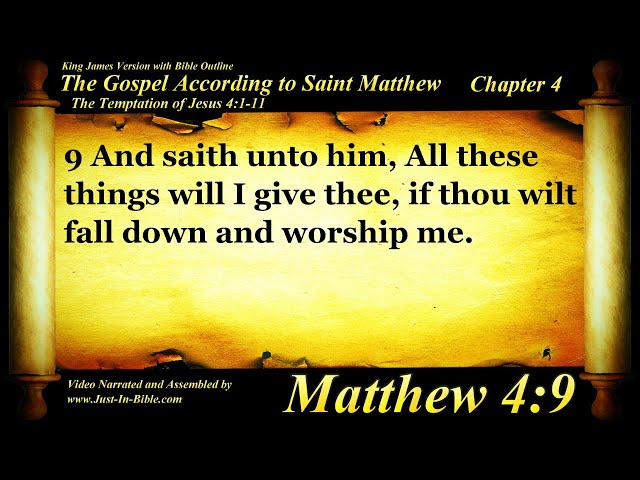
Have you ever wondered about the significance of Matthew Chapter 4 in the King James Bible? In this powerful chapter, we are given insights into the temptations faced by Jesus in the wilderness and how he overcame them with unwavering faith and strength. By delving into the verses of this chapter, we can gain a deeper understanding of the spiritual trials we may face in our own lives and learn how to overcome them with the guidance of God’s word.
Exploring Matthew Chapter 4 in the King James Bible can offer us invaluable lessons on resilience, faith, and the power of God’s presence in our lives. By studying this chapter closely, we can discover practical ways to navigate through challenges and temptations, ultimately strengthening our relationship with God and finding peace in His promises. Join us as we unpack the profound teachings of Matthew Chapter 4 and unearth the timeless wisdom that continues to inspire and guide believers today.
Exploring the Significance of Matthew Chapter 4 in the King James Bible
In Matthew Chapter 4 of the King James Bible, we see Jesus being tempted by the devil in the wilderness. The chapter begins with Jesus fasting for forty days and nights, after which He is hungry. The devil then approaches Him and tempts Him three times.
In the first temptation, the devil tells Jesus to turn stones into bread to satisfy His hunger. Jesus responds by quoting scripture, saying, “Man shall not live by bread alone, but by every word that proceedeth out of the mouth of God.”
In the second temptation, the devil takes Jesus to the pinnacle of the temple and tells Him to throw Himself down, quoting scripture to support his challenge. Again, Jesus quotes scripture in response, saying, “Thou shalt not tempt the Lord thy God.”
Finally, in the third temptation, the devil takes Jesus to a high mountain and offers Him all the kingdoms of the world if He will bow down and worship him. Jesus rebukes the devil, saying, “Get thee hence, Satan: for it is written, Thou shalt worship the Lord thy God, and him only shalt thou serve.”
After these temptations, angels come and minister to Jesus. He then begins His ministry in Galilee, preaching the gospel of the kingdom and calling His disciples to follow Him.
This chapter highlights Jesus’ steadfastness in the face of temptation and His reliance on scripture to resist the devil’s advances. It sets the stage for His ministry and the teachings He will impart to His followers.
What is the meaning of Matthew Chapter 4?
In Matthew Chapter 4, Jesus is tempted by the devil in the wilderness. After fasting for 40 days and 40 nights, the devil tries to tempt Jesus three times. In response to each temptation, Jesus quotes Scripture to refute the devil’s temptations. This chapter illustrates Jesus’ strength and resolve in the face of temptation and serves as an example for believers to rely on God’s Word in times of temptation and struggle.
What is Matthew 4 1 in the King James version?
In the King James Version, Matthew 4:1 reads:
“Then was Jesus led up of the Spirit into the wilderness to be tempted of the devil.”
What is the story of Matthew 4?
In Matthew 4, the story describes Jesus being tempted by the devil in the wilderness. After fasting for forty days and nights, Jesus is approached by the devil who tempts him three times. First, the devil suggests that Jesus turn stones into bread to satisfy his hunger, to which Jesus responds with scripture, saying that man does not live on bread alone but on every word that comes from the mouth of God.
Next, the devil takes Jesus to the highest point of the temple and challenges him to throw himself down, quoting scripture about God’s angels protecting him. Again, Jesus rebukes the devil using scripture, saying that one should not put the Lord their God to the test.
Lastly, the devil takes Jesus to a high mountain and shows him all the kingdoms of the world, offering them to Jesus if he would bow down and worship him. Jesus once again rejects the devil, commanding him to leave and declaring that one must worship and serve only God.
After these temptations, angels come and minister to Jesus, showing that God is always there to provide strength and support in times of trial.
What does Raca mean in the Bible?
In the Bible, the term “Raca” comes from Matthew 5:22 in the New Testament. It is considered a derogatory term or insult, used to express contempt or disdain towards someone. In this verse, Jesus warns against calling someone “Raca” (an Aramaic term meaning “fool” or “empty one”), emphasizing the seriousness of such insults and the importance of reconciliation. The use of Raca highlights the offensiveness of the language and the need for respectful and loving communication in relationships.