
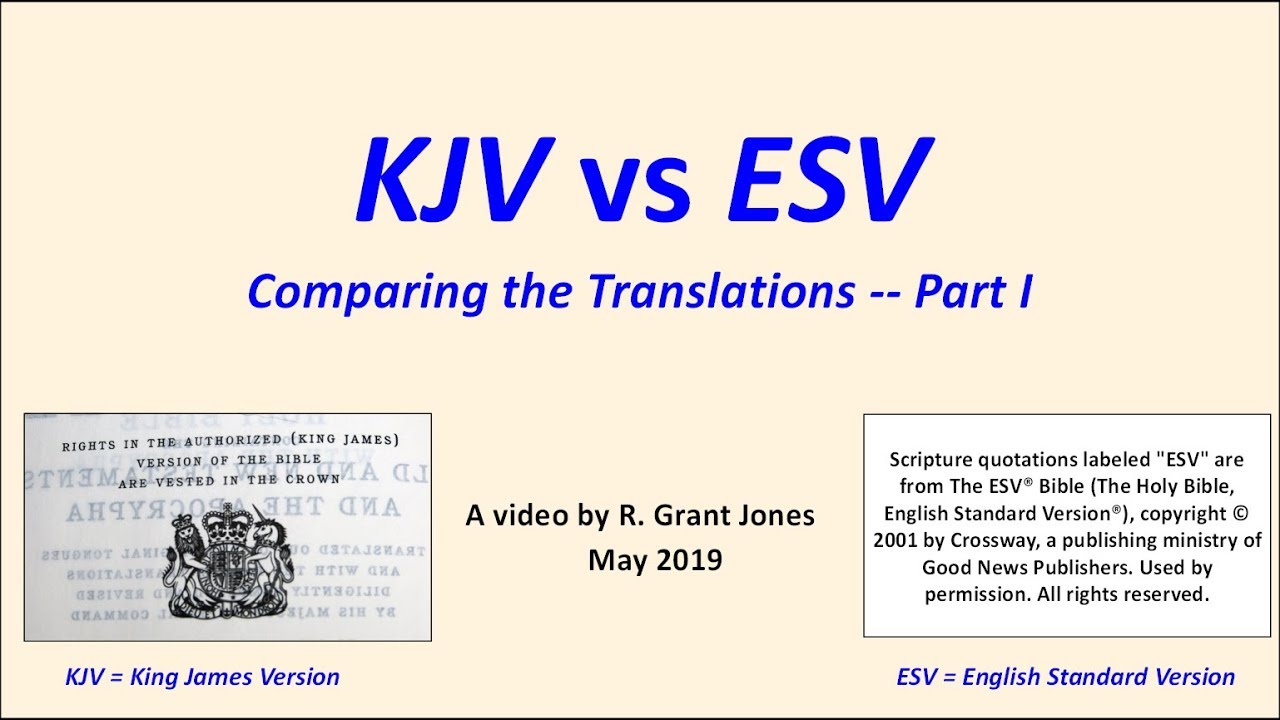
Are you unsure which version of the Bible to choose for your daily readings and studies? The English Standard Version (ESV) and the King James Version (KJV) are two popular translations that offer unique benefits to readers. In this post, we will compare the ESV and the KJV to help you decide which version best suits your needs and preferences.
The English Standard Version is known for its readability and accuracy in conveying the original meaning of the biblical text. On the other hand, the King James Version has a rich historical significance and beautiful language that many readers appreciate. By exploring the differences between these two translations, you can better understand how each version can enhance your understanding and engagement with the Word of God.
Comparing the English Standard Version and the King James Bible: Which Translation Reigns Supreme?
English Standard Version (ESV) vs King James Version (KJV)
The English Standard Version (ESV) and the King James Version (KJV) are two of the most popular translations of the Bible, each with its own unique characteristics and style. Both versions have a long history and have been widely used by Christians around the world. In this comparison, we will explore some of the key differences between the ESV and the KJV.
Language and Style:
One of the main differences between the ESV and the KJV is the language and style used in the translation. The KJV, also known as the Authorized Version, was first published in 1611 and has a more archaic and formal style of language. It uses Elizabethan English, which can be challenging for modern readers to understand at times. On the other hand, the ESV, first published in 2001, uses a more contemporary style of language that is easier for modern readers to comprehend.
Accuracy and Faithfulness:
Both the ESV and the KJV are known for their commitment to accuracy and faithfulness to the original languages of the Bible. The KJV was translated from the Textus Receptus (Received Text) in Greek for the New Testament, while the Old Testament was translated from the Masoretic Text in Hebrew. The ESV, on the other hand, used the latest scholarly research and manuscripts available to ensure accuracy in translation.
Readability:
When it comes to readability, the ESV is generally considered to be more accessible to modern readers due to its use of contemporary language. The KJV, with its archaic style of language, can be more challenging for some readers to understand, especially those who are not familiar with older forms of English.
Popularity and Usage:
The KJV has a long history of being one of the most popular and widely used translations of the Bible. It has had a significant impact on the English language and literature over the centuries. However, in recent years, the ESV has gained popularity among Christians for its accuracy, readability, and clarity.
In conclusion, both the ESV and the KJV are valuable translations of the Bible, each with its own strengths and characteristics. The choice between the two ultimately depends on personal preference and the specific needs of the reader. Whether you prefer the traditional and majestic language of the KJV or the modern and accessible language of the ESV, both versions serve as powerful tools for studying and understanding the Word of God.
Is the English Standard Version of the Bible accurate?
Yes, the English Standard Version of the Bible is known for its accuracy and faithfulness to the original Hebrew and Greek texts. It is considered a reliable translation by many scholars and theologians. The ESV strives to balance readability with linguistic precision, making it a popular choice for both personal study and public reading.
What verses are not in the ESV?
The English Standard Version (ESV) of the Bible is a highly respected and widely used translation, but like any translation, it may differ from other versions in terms of which verses are included. Some verses that are not found in the ESV but appear in other translations include:
1. Mark 16:9-20 – The longer ending of Mark, which includes accounts of post-resurrection appearances of Jesus, is not included in the oldest and most reliable manuscripts of the Gospel of Mark.
2. John 7:53-8:11 – The story of the adulterous woman brought before Jesus is not present in some of the earliest manuscripts of the Gospel of John.
3. 1 John 5:7 – The Comma Johanneum, a disputed passage about the Trinity, is not included in most modern translations of the Bible, including the ESV, because it is not found in early Greek manuscripts.
These are just a few examples of verses that are not included in the ESV but appear in other versions of the Bible. It’s important to note that the absence of these verses in the ESV does not detract from the overall message and teachings of the Bible as a whole.
What is the most accurate translation of the Bible in the world?
The most accurate translation of the Bible is a subjective topic, as different translations serve different purposes and are based on different textual sources. However, many scholars consider the New American Standard Bible (NASB) to be one of the most word-for-word literal translations available in English. The NASB aims to stick closely to the original Hebrew, Aramaic, and Greek texts, providing a more literal and precise rendition of the original languages. Other highly respected translations known for accuracy include the English Standard Version (ESV) and the New Revised Standard Version (NRSV).
What Bible translation is closest to the original?
The Bible translation that is considered to be closest to the original texts is the New American Standard Bible (NASB). It is known for its literal translation approach, aiming to capture the exact wording and structure of the original Hebrew, Aramaic, and Greek manuscripts. Many scholars and theologians prefer the NASB for its accuracy and faithfulness to the original languages of the Bible.