
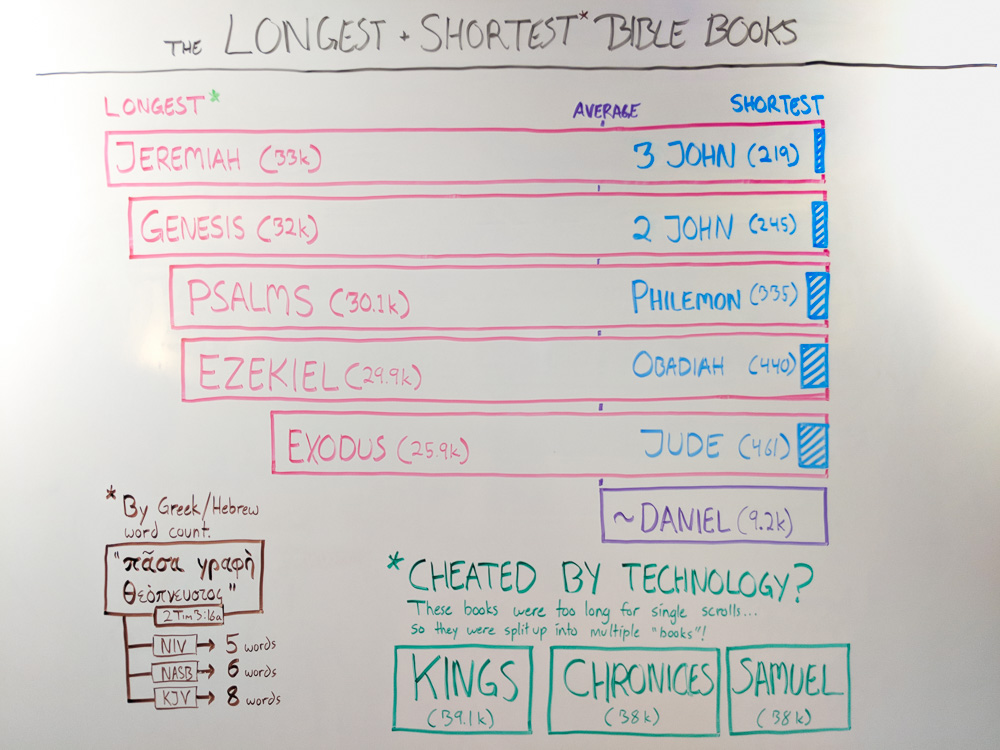
Have you ever wondered about the order of the books in the Bible from shortest to longest? This blog post titled “Books of the Bible Shortest to Longest” will satisfy your curiosity and provide a helpful reference for understanding the length variations within the biblical canon. By exploring this chronological list, you can gain a deeper appreciation for the diversity of content and messages contained in each book.
Understanding the order of the books in the Bible from shortest to longest can offer valuable insights into the historical context and thematic progression of the scriptures. Whether you are a seasoned scholar or a curious reader, this blog post will serve as a useful resource for navigating the vast array of texts that make up the foundation of Christian faith. Join us on this journey through the books of the Bible and discover the significance of their lengths in shaping the overall narrative of the Word of God.
The Bible: Exploring the Shortest to Longest Books in Order
Obadiah is the shortest book in the Bible, with only 21 verses. It is a prophecy against the nation of Edom for their pride and violence against the people of Judah. Despite its brevity, Obadiah delivers a powerful message about the consequences of arrogance and mistreatment of others.
Next in line is Philemon, a personal letter written by the Apostle Paul to Philemon, a wealthy Christian in Colossae. This short but impactful letter addresses the issue of Onesimus, a runaway slave who had become a Christian. Paul encourages Philemon to forgive Onesimus and receive him back not as a slave, but as a beloved brother in Christ.
The third shortest book in the Bible is 3 John, which consists of only 14 verses. This letter, written by the Apostle John, commends Gaius for his hospitality and faithful support of fellow believers. It also addresses the negative actions of Diotrephes, a leader in the church who was causing strife and discord.
Jumping into slightly longer books, we have 2 John with 13 verses. This epistle is also written by John and emphasizes the importance of walking in truth and love. It warns against false teachers and encourages believers to abide in the teachings of Christ.
Moving on to the longer end of the spectrum, we find the book of Titus with 46 verses. This letter, written by Paul to Titus, provides instructions for church leaders on proper conduct, sound doctrine, and dealing with false teachings. It emphasizes the importance of living godly lives and fulfilling one’s responsibilities in the church.
Next up is the book of Esther which contains 167 verses. This fascinating narrative tells the story of Queen Esther, a Jewish woman who becomes queen of Persia and ultimately saves her people from destruction through her courage and faithfulness to God.
Finally, the longest book in the Bible is the book of Psalms with a whopping 150 chapters. Psalms is a collection of poetic songs and prayers that cover a wide range of emotions and themes, including praise, lament, thanksgiving, and trust in God. These timeless verses have provided comfort and inspiration to countless generations of believers.
Which book of the Bible is the shortest?
The shortest book of the Bible is Obadiah. It consists of only 21 verses.
What is the longest and the shortest book in the Bible?
The longest book in the Bible is the Book of Psalms, with 150 chapters. The shortest book in the Bible is the Book of Obadiah, with only 1 chapter.
In what order should I read the Bible?
When deciding in what order to read the Bible, it is important to consider your personal goals and preferences. However, a common recommendation is to start with the Book of John in the New Testament. This book provides a good introduction to the life and teachings of Jesus Christ. After that, many people choose to read the other Gospels (Matthew, Mark, and Luke) to gain a comprehensive understanding of Jesus’ ministry.
Following the Gospels, reading the Book of Acts can provide insight into the early Christian church and its development. From there, some people choose to read the Pauline Epistles (Romans, Corinthians, Galatians, etc.) to deepen their understanding of Christian theology.
After the Pauline Epistles, reading the General Epistles (James, Peter, John, Jude) can offer practical wisdom for living out the Christian faith. Finally, many readers finish with the Book of Revelation, which offers a glimpse into the end times and God’s ultimate plan for humanity.
Ultimately, the order in which you read the Bible is a personal choice, and there is no “one-size-fits-all” approach. It can be helpful to consult with a pastor, mentor, or study guide for additional guidance and insights as you navigate your own journey through the Scriptures.
What are the 73 books of the Bible?
The 73 books of the Bible include 46 books in the Old Testament and 27 books in the New Testament. In the Old Testament, the books are categorized into the Pentateuch (Genesis, Exodus, Leviticus, Numbers, Deuteronomy), Historical Books (Joshua, Judges, Ruth, 1 Samuel, 2 Samuel, 1 Kings, 2 Kings, 1 Chronicles, 2 Chronicles, Ezra, Nehemiah, Tobit, Judith, Esther, 1 Maccabees, 2 Maccabees), Wisdom Books (Job, Psalms, Proverbs, Ecclesiastes, Song of Solomon, Wisdom, Sirach), and Prophets (Isaiah, Jeremiah, Lamentations, Baruch, Ezekiel, Daniel, Hosea, Joel, Amos, Obadiah, Jonah, Micah, Nahum, Habakkuk, Zephaniah, Haggai, Zechariah, Malachi).
In the New Testament, the books include the Gospels (Matthew, Mark, Luke, John), the Acts of the Apostles, the Pauline Epistles (Romans, 1 Corinthians, 2 Corinthians, Galatians, Ephesians, Philippians, Colossians, 1 Thessalonians, 2 Thessalonians, 1 Timothy, 2 Timothy, Titus, Philemon), General Epistles (Hebrews, James, 1 Peter, 2 Peter, 1 John, 2 John, 3 John, Jude), and the Book of Revelation.