
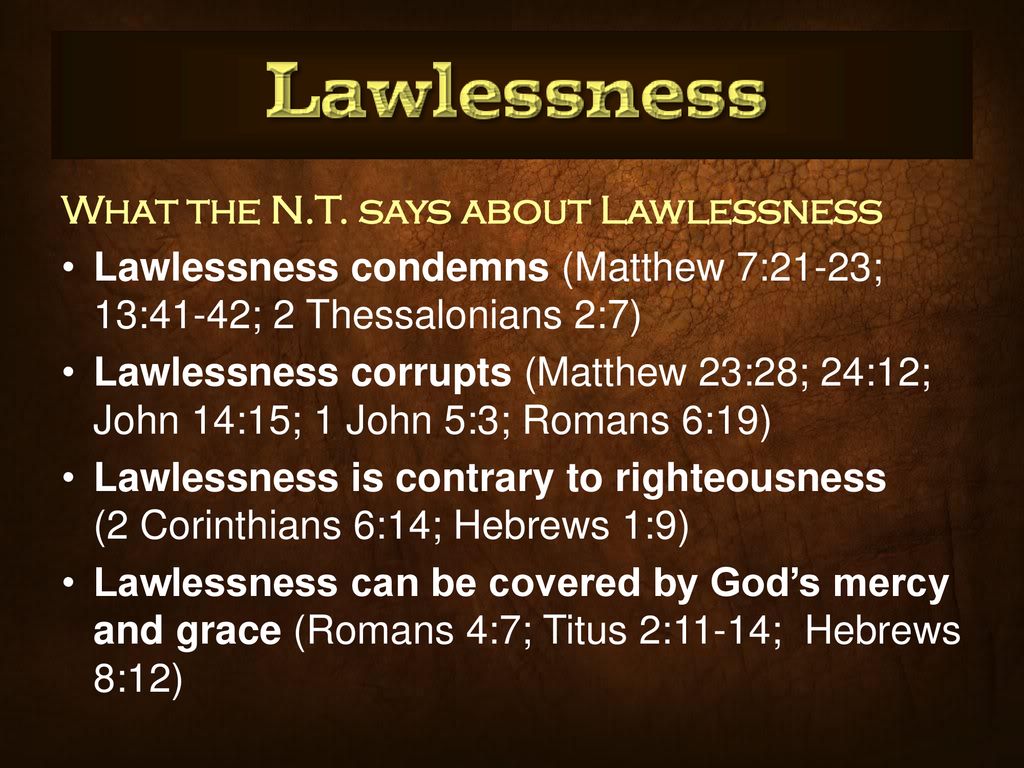
Have you ever wondered what the term “lawlessness” truly means in the context of the Bible? Delving into this concept can provide invaluable insights into understanding the importance of law and order in the Christian faith. In this blog post, we will explore the definition of lawlessness as depicted in the Bible and uncover its significance for believers today.
Understanding the concept of lawlessness in the Bible can offer clarity on the boundaries that God has set for His people and the consequences of straying from His commandments. By gaining a deeper insight into this topic, readers can strengthen their faith, live more authentically according to biblical principles, and appreciate the grace and mercy that God extends to those who seek to uphold His laws. Join us on this journey of exploration as we unpack the meaning of lawlessness in the Bible and its implications for our lives as Christians.
Exploring the Concept of Lawlessness in the Bible: A Deep Dive into Biblical Perspectives
Definition of Lawlessness in the Bible
Lawlessness is a concept that is mentioned numerous times in the Bible and is often used to describe a state of rebellion against God’s divine laws and principles. In the original Greek text, the word most commonly translated as “lawlessness” is “anomia,” which literally means “without law” or “no law.”
The Bible teaches that disobeying God’s commandments and living a life contrary to His will is considered lawlessness. This can manifest in various forms, including immorality, dishonesty, violence, and defiance of authority. In essence, lawlessness is a rejection of God’s perfect standard of righteousness and a refusal to submit to His authority.
One of the most significant passages referencing lawlessness is found in the book of Matthew, where Jesus warns about the increase of lawlessness in the end times. In Matthew 24:12, Jesus says, “And because lawlessness will be increased, the love of many will grow cold.” This verse highlights the connection between lawlessness and a lack of love, emphasizing that disobedience to God’s laws leads to a breakdown of relationships and a decline in moral values.
Furthermore, the apostle Paul addresses the issue of lawlessness in his letters to the early Christian churches. In 2 Thessalonians 2:7, Paul speaks of the “mystery of lawlessness” that is already at work in the world. He warns believers to stand firm in the truth and not be swayed by deceptive teachings or ungodly behavior.
Ultimately, the Bible presents lawlessness as a serious offense in the eyes of God, deserving of judgment and condemnation. However, it also offers hope and redemption through faith in Jesus Christ, who came to fulfill the law and provide a way for humanity to be reconciled to God.
As followers of Christ, we are called to live in obedience to God’s commands and to reject the ways of lawlessness that lead us away from Him. By cultivating a heart of love, humility, and submission to God’s will, we can stand firm against the tide of lawlessness in our world and be a beacon of light and truth to those around us.
What is the full meaning of lawlessness?
In the context of the Bible, lawlessness refers to a state of being without law or disobedience to law. It signifies a lack of regard for moral and spiritual principles, leading to actions that are contrary to the teachings of God. The concept of lawlessness is often associated with rebellion against divine authority and unrighteous behavior. In the New Testament, the term is used to describe those who reject the authority of God and His commandments, choosing instead to follow their own sinful desires. The consequence of lawlessness is separation from God and the potential for judgment and punishment.
What does the Bible say about lawlessness?
In the Bible, lawlessness is frequently mentioned as a sign of the end times and a characteristic of those who reject God’s commands. In Matthew 24:12, Jesus speaks about the end times, saying, “And because lawlessness will be increased, the love of many will grow cold.” This verse suggests that as lawlessness increases, love and compassion decrease.
The Apostle Paul also addresses the issue of lawlessness in 2 Thessalonians 2:3-4, warning about the coming of the lawless one who will oppose and exalt himself against every so-called god or object of worship. Additionally, in 1 John 3:4, sin is defined as lawlessness: “Everyone who makes a practice of sinning also practices lawlessness; sin is lawlessness.”
Overall, the Bible condemns lawlessness as a rejection of God’s authority and commands. Christians are called to live in obedience to God’s Word and to resist the temptations of lawlessness that can lead them away from God’s will.
Does the Bible say lawlessness is sin?
Yes, the Bible does indeed say that lawlessness is sin. In 1 John 3:4, it states, “Everyone who makes a practice of sinning also practices lawlessness; sin is lawlessness.” This verse emphasizes that breaking God’s laws and living in rebellion against His commandments is equated with sin. Similarly, in Matthew 7:23, Jesus says to those who practice lawlessness, “I never knew you; depart from me, you workers of lawlessness.” This highlights the seriousness of living a life devoid of God’s laws and commandments. Ultimately, the Bible consistently teaches that lawlessness is a manifestation of sin and disobedience to God.
What is the Hebrew word for lawlessness?
In the context of the Bible, the Hebrew word for lawlessness is “פֶּשַׁע” (pesha). This term is often used to refer to rebellion against God’s laws and commands.