
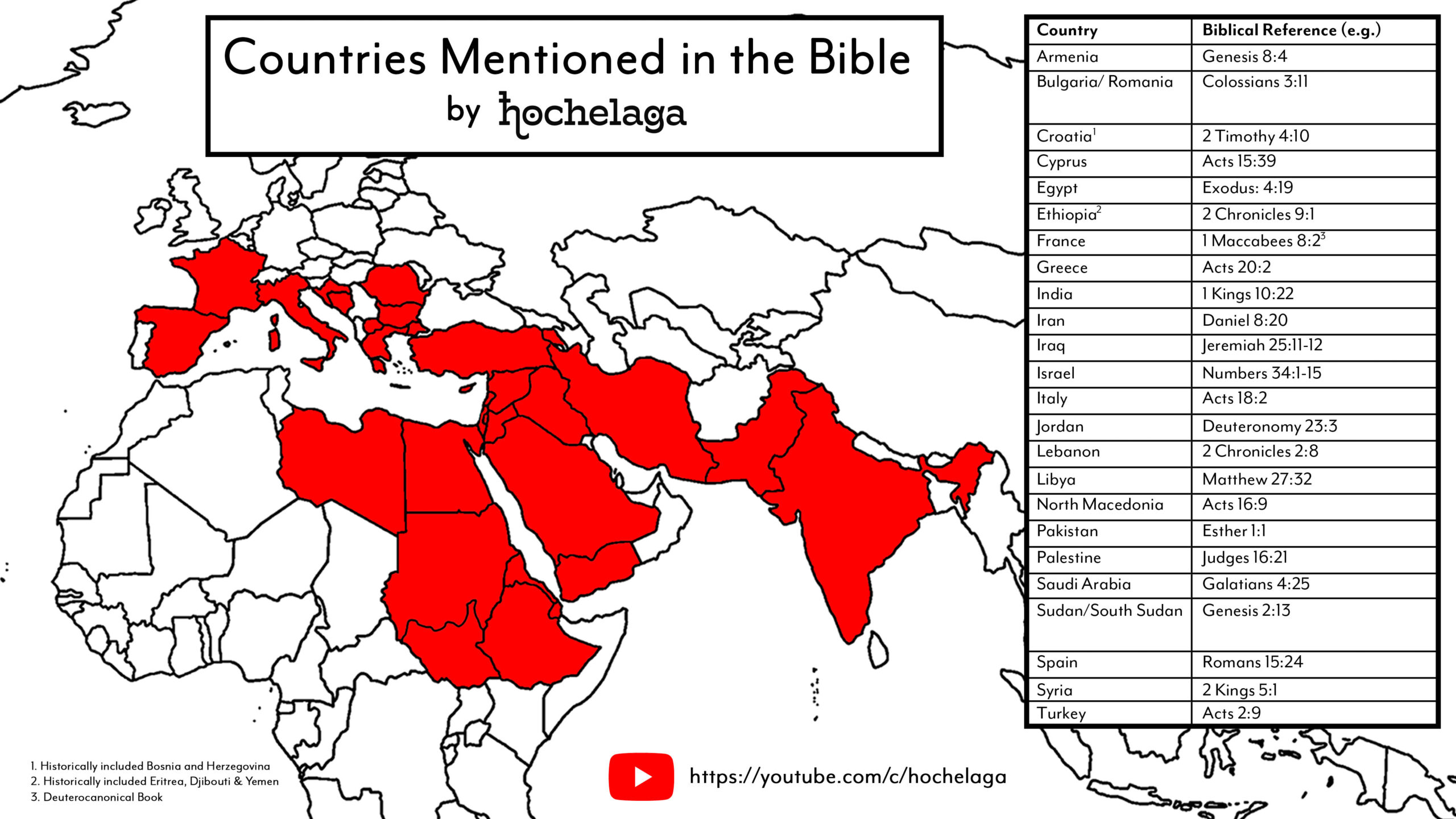
Have you ever wondered about the geographical locations mentioned in the Bible and where they are on a map? In this blog post, we will explore the fascinating Map of Countries Mentioned in the Bible. By delving into the various regions and cities referenced in the scriptures, we can gain a deeper understanding of the historical context and significance of these locations.
This interactive map will not only help you visualize the places described in the Bible but also enhance your comprehension of the stories and teachings within the holy text. Whether you are a scholar, a history enthusiast, or a curious individual seeking to enrich your knowledge of the biblical world, this Map of Countries Mentioned in the Bible is sure to provide valuable insights and a fresh perspective on the ancient lands that played a pivotal role in shaping religious beliefs and civilizations.
Exploring the Geographic Landscape: Countries Referenced in the Bible
Map of Countries Mentioned in the Bible
The Bible is a sacred text that contains references to various geographical locations and nations. These references provide a glimpse into the ancient world and the historical context in which the events of the Bible took place. Understanding the geography of the Bible can enhance our comprehension of the narratives and themes within its pages. Here is a detailed overview of some of the key countries mentioned in the Bible:
1. Israel: One of the central locations in the Bible, Israel is the homeland of the Jewish people and the setting for many important events in biblical history. From the patriarchs Abraham, Isaac, and Jacob to the reigns of King David and King Solomon, Israel plays a prominent role throughout the Old Testament.
2. Egypt: Egypt is frequently mentioned in the Bible, particularly in the context of the Israelites’ enslavement and their exodus from Egypt under the leadership of Moses. The land of Egypt and its powerful pharaohs feature prominently in the narrative of the book of Exodus.
3. Babylon: Babylon was a mighty empire in ancient Mesopotamia, known for its wealth, power, and influence. The Babylonian captivity of the Israelites is a pivotal event in biblical history, as the Babylonians conquered Judah and exiled many of its inhabitants to Babylon.
4. Assyria: The Assyrian Empire was a major regional power in the ancient Near East, known for its military conquests and brutal tactics. Assyria plays a significant role in the history of Israel, particularly in the books of Kings and Chronicles.
5. Persia: The Persian Empire, ruled by kings such as Cyrus the Great and Darius the Great, is mentioned in the Bible as well. The Persians played a crucial role in the restoration of the Jewish people to their homeland following the Babylonian exile.
6. Greece: Although not as prominent in the Old Testament, Greece becomes more significant in the New Testament period. The Hellenistic influence on the region, as well as the conquests of Alexander the Great, shaped the cultural and political landscape of the ancient world.
7. Rome: The Roman Empire is a key player in the New Testament, particularly during the time of Jesus and the early Christian church. The Roman occupation of Judea, the trial of Jesus before Pontius Pilate, and the missionary journeys of the apostle Paul all take place within the context of Roman rule.
8. Syria: Syria, located to the northeast of Israel, is mentioned in various accounts throughout the Bible. The interactions between the kingdoms of Israel and Syria, as well as the involvement of Syrian rulers in regional conflicts, are documented in the biblical narratives.
Understanding the geographical context of the Bible helps to enrich our understanding of the historical events and cultural dynamics at play in the biblical world. By exploring the map of countries mentioned in the Bible, we can gain insights into the interconnectedness of ancient civilizations and the ways in which these nations influenced the development of biblical history and theology.
Which countries are mentioned in the Bible?
Several countries are mentioned in the Bible, including:
1. Israel: This is the primary focus of many events and stories in the Bible, particularly in the Old Testament.
2. Egypt: Egypt is frequently mentioned in the Bible, especially in relation to the Israelites’ time in captivity.
3. Assyria: The Assyrians were a significant ancient empire mentioned in various Bible passages.
4. Babylon: Babylon plays a prominent role in the Bible, particularly in the context of the Babylonian exile.
5. Persia: The Persian Empire is mentioned in the Bible, notably in relation to figures like King Cyrus.
6. Greece: Greece is indirectly referenced in the Bible, particularly in the book of Daniel.
7. Rome: The Roman Empire is featured in the New Testament, as it was the ruling power during the time of Jesus and the early Christian church.
These are just a few examples of the countries mentioned in the Bible, showcasing its diverse geographical scope.
What country was Africa in the Bible?
In the Bible, Africa is not specifically mentioned as a country. However, there are references to regions within Africa such as Egypt, Ethiopia, and Libya. These places are mentioned in various contexts throughout the Old and New Testaments.
Did they have maps in the Bible?
Maps as we know them today were not present in the Bible. However, there are descriptions of geographical locations and directions in the Bible that have been used to create maps by scholars and historians. These descriptions are found throughout various books, such as Genesis, Exodus, and Acts. Maps have been created to help visualize the journeys of biblical figures like Abraham, Moses, and Paul. While these maps are based on interpretations of the text, they provide insight into the historical context and settings of the events described in the Bible.
What are the continents mentioned in the Bible?
In the Bible, the continents mentioned are Asia, Africa, and Europe. Asia is frequently referenced due to its connection to biblical events and locations, Africa is mentioned in relation to Egypt and Ethiopia, while Europe is associated with places like Greece and Rome.