
Have you ever stopped to consider the significance of light in the Bible? From the creation story in Genesis to the imagery of Jesus as the light of the world, light plays a powerful and symbolic role throughout the scriptures. In this blog post, we will explore the different types of light mentioned in the Bible and how understanding them can deepen our spiritual understanding and illuminate our faith journey.
By delving into the various representations of light in the Bible, we can gain insight into the character of God and His plans for humanity. Whether it’s the guiding light that leads the Israelites through the wilderness or the metaphorical light that exposes truth and dispels darkness, each mention of light in the Bible offers valuable lessons and encouragement for our daily lives. Join us as we uncover the hidden meanings behind these illuminating passages and discover how they can shine a light on our path towards a closer relationship with God.
The Illuminating Significance of Different Light Sources in the Bible
Light is a recurring motif throughout the Bible, symbolizing various aspects of God, truth, righteousness, and guidance. There are several types of light mentioned in the Bible, each carrying its own significance and symbolism.
1. Physical Light: The most literal interpretation of light in the Bible refers to physical light, which was the first thing created by God according to the book of Genesis. In Genesis 1:3-4, it says, “And God said, ‘Let there be light,’ and there was light. God saw that the light was good, and he separated the light from the darkness.” This physical light represents God’s power, creation, and separation of good from evil.
2. Divine Light: Divine light symbolizes the presence and glory of God. In Psalm 27:1, it says, “The Lord is my light and my salvation—whom shall I fear? The Lord is the stronghold of my life—of whom shall I be afraid?” This type of light represents God’s guidance, protection, and salvation for believers.
3. Revelatory Light: The Bible often speaks of light as a source of revelation and understanding. In Psalm 119:105, it says, “Your word is a lamp for my feet, a light on my path.” This type of light signifies God’s Word illuminating our way and providing wisdom and insight.
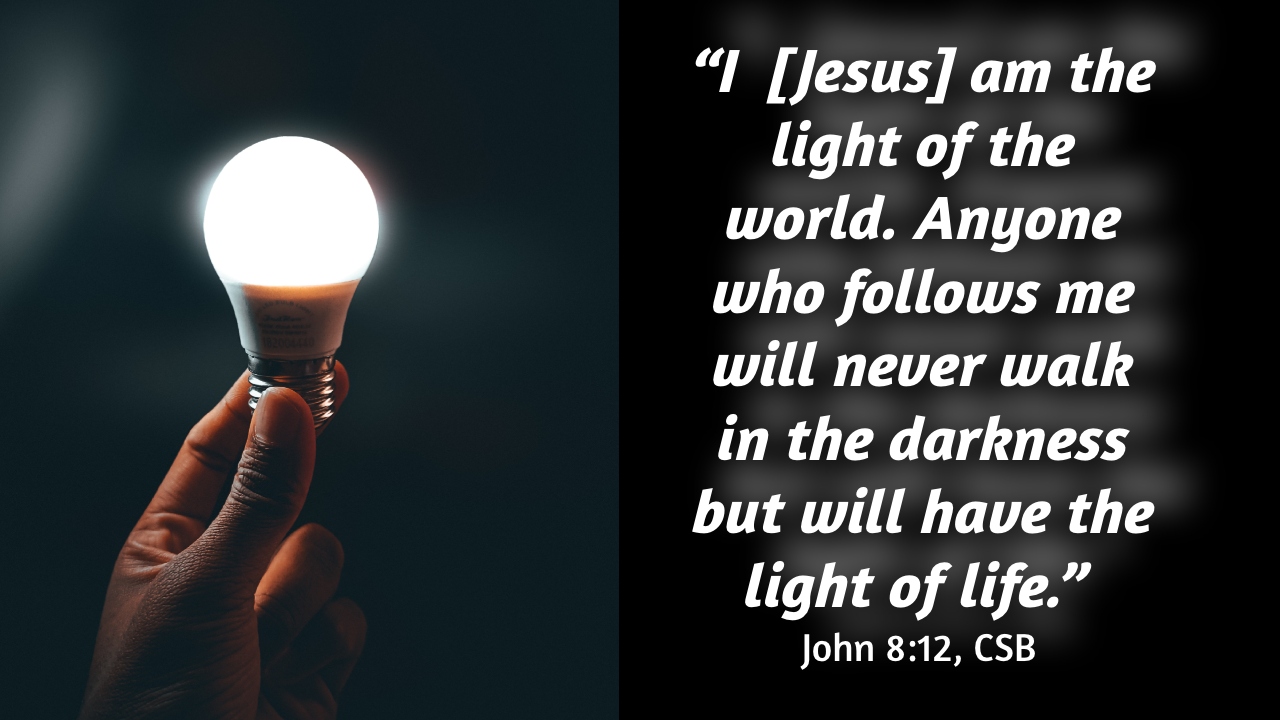
4. Jesus as the Light: In the New Testament, Jesus is frequently referred to as the light of the world. In John 8:12, Jesus says, “I am the light of the world. Whoever follows me will never walk in darkness but will have the light of life.” Jesus embodies the divine light that brings salvation, truth, and spiritual enlightenment to humanity.
5. Spiritual Light: Spiritual light is often associated with righteousness, purity, and holiness. In Ephesians 5:8, it says, “For you were once darkness, but now you are light in the Lord. Live as children of light.” Believers are called to walk in the light, living lives that reflect the righteousness and goodness of God.
6. Eternal Light: The Bible also speaks of a future state where there will be no need for the sun or moon because God himself will be the light. In Revelation 21:23, it says, “The city does not need the sun or the moon to shine on it, for the glory of God gives it light, and the Lamb is its lamp.” This eternal light symbolizes the presence, glory, and eternal reign of God in the new heaven and earth.
In conclusion, the various types of light mentioned in the Bible carry rich symbolism and significance, representing God’s power, presence, revelation, salvation, righteousness, and eternal glory. As believers, we are called to walk in the light, following Jesus, the light of the world, and reflecting His light to those around us.
What are the forms of light in the Bible?
In the Bible, light is mentioned in various forms. One of the most significant references to light is the “light” that symbolizes God’s presence and glory. For example, in Psalm 27:1 it says, “The Lord is my light and my salvation—whom shall I fear?” This divine light represents guidance, protection, and deliverance.
Another form of light often mentioned in the Bible is “the light of the world,” which refers to Jesus Christ. In John 8:12, Jesus says, “I am the light of the world. Whoever follows me will never walk in darkness, but will have the light of life.” This indicates that through Jesus, believers receive spiritual enlightenment, truth, and eternal life.
Furthermore, there are instances where light is described as a symbol of righteousness, purity, and truth. In Ephesians 5:8, it says, “For you were once darkness, but now you are light in the Lord. Live as children of light.” This suggests that living in accordance with God’s Word brings about moral clarity and sincerity.
Overall, the use of light in the Bible carries rich symbolism and conveys profound spiritual truths concerning God’s nature, Christ’s role in salvation, and the believers’ ethical conduct.
What are the 5 characteristics of light in the Bible?
1. Guidance: Light is often used in the Bible as a symbol of guidance and direction. In Psalm 119:105, it says “Your word is a lamp to my feet and a light to my path.”
2. Revelation: Light is also associated with revelation and understanding. In 2 Corinthians 4:6, it says “For God, who said, ‘Let light shine out of darkness,’ made his light shine in our hearts to give us the light of the knowledge of God’s glory displayed in the face of Christ.”
3. Purity: Light is a symbol of purity and holiness in the Bible. In 1 John 1:5, it says “God is light; in him there is no darkness at all.”
4. Life: Light is connected to life and vitality. In John 8:12, Jesus says “I am the light of the world. Whoever follows me will never walk in darkness, but will have the light of life.”
5. Victory over darkness: Light triumphs over darkness in the Bible. John 1:5 declares “The light shines in the darkness, and the darkness has not overcome it.”
How many lights are in the Bible?
There are numerous references to lights in the Bible. The most well-known mention is in Genesis 1:3-5, where God creates light on the first day of creation: “And God said, ‘Let there be light,’ and there was light. God saw that the light was good, and he separated the light from the darkness. God called the light ‘day,’ and the darkness he called ‘night.'” In the New Testament, Jesus refers to Himself as the “light of the world” in John 8:12: “I am the light of the world. Whoever follows me will never walk in darkness, but will have the light of life.” Additionally, in Matthew 5:14, Jesus tells His followers, “You are the light of the world. A town built on a hill cannot be hidden.” These verses emphasize the spiritual significance of light in the Bible.
What is the source of light in the Bible?
In the Bible, the source of light is often associated with God. In the Book of Genesis, it is God who creates light, saying, “Let there be light,” which separates light from darkness. In the New Testament, Jesus is also referred to as the “light of the world” in the book of John, symbolizing guidance, truth, and salvation. Throughout the Bible, light is used as a metaphor for goodness, understanding, and divine presence.