
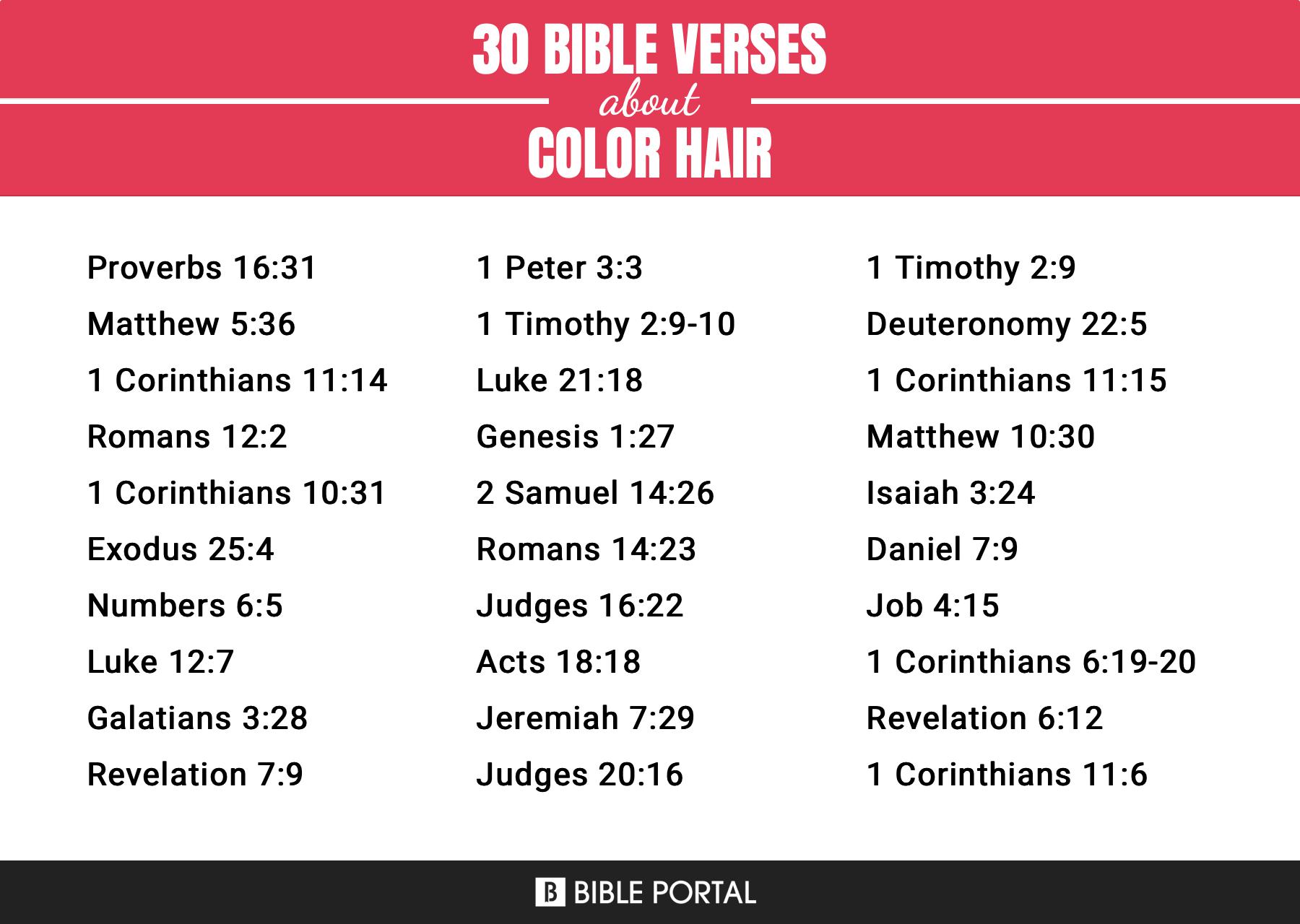
Have you ever wondered what the Bible has to say about dying hair? In a world where trends and fashion statements constantly evolve, it’s important to seek guidance from scripture on topics that may seem trivial but hold significance in our lives. Understanding the biblical perspective on dying hair can provide insights into how we should approach personal grooming and appearance as followers of Christ.
In this blog post, we delve into what the Bible says about dying hair and explore the deeper meanings behind this practice. By examining relevant passages and understanding the cultural context of biblical times, we can gain a better appreciation for the principles that should guide our decisions regarding hair dyeing. Join us on this journey as we uncover the wisdom and insights that the Bible offers on this seemingly modern topic.
The Biblical perspective on dyeing hair: Exploring what the Bible has to say
What Does the Bible Say About Dying Hair
In the Bible, there are a few passages that mention hair and its significance. However, there is no direct verse that specifically addresses the act of dyeing one’s hair. That being said, there are principles and teachings in the Bible that can be applied to the topic of dying hair.
One such principle is found in 1 Samuel 16:7, where it says, “But the Lord said to Samuel, ‘Do not look at his appearance or at his physical stature, because I have refused him. For the Lord does not see as man sees; for man looks at the outward appearance, but the Lord looks at the heart.’” This verse emphasizes the importance of inner qualities over outward appearances. While dying hair may be a personal choice for cosmetic reasons, it is essential to remember that true beauty comes from within.
Another relevant passage is 1 Peter 3:3-4, which states, “Do not let your adornment be merely outward—arranging the hair, wearing gold, or putting on fine apparel— rather let it be the hidden person of the heart, with the incorruptible beauty of a gentle and quiet spirit, which is very precious in the sight of God.” This passage encourages believers to focus on cultivating inner qualities such as a gentle and quiet spirit, which are valued by God.
It is also worth considering 1 Corinthians 6:19-20, which reminds us, “Or do you not know that your body is the temple of the Holy Spirit who is in you, whom you have from God, and you are not your own? For you were bought at a price; therefore glorify God in your body and in your spirit, which are God’s.” This verse highlights the importance of honoring God with our bodies, including how we choose to present ourselves.
In conclusion, while the Bible does not explicitly forbid dying hair, it does provide principles that guide believers in their choices regarding appearance. Ultimately, the focus should be on inner qualities, honoring God with our bodies, and maintaining a humble and modest attitude in all that we do.
What Bible verse talks about hair coverings?
One Bible verse that talks about hair coverings is 1 Corinthians 11:6, which states, “For if a woman does not cover her head, she might as well have her hair cut off; but if it is a disgrace for a woman to have her hair cut off or her head shaved, then she should cover her head.” This verse addresses the practice of women covering their heads during worship and prayer.
What does the Bible say about gray hair and wisdom?
In the Bible, gray hair is often associated with wisdom and honor. Proverbs 16:31 says, “Gray hair is a crown of glory; it is gained in a righteous life.” This verse highlights the idea that reaching old age and having gray hair can be a sign of a life lived righteously and filled with wisdom. Additionally, Leviticus 19:32 instructs, “You shall stand up before the gray head and honor the face of an old man, and you shall fear your God: I am the Lord.” This emphasizes the importance of respecting and honoring the elderly, who are often seen as wise individuals with valuable life experience.
Why is hair so important in the Bible?
Hair is often seen as significant in the Bible due to its symbolic importance in various contexts. In 1 Corinthians 11:15, it mentions that a woman’s hair is her glory, suggesting that long hair symbolizes beauty and femininity. In the Old Testament, hair was sometimes associated with strength and power, as seen in the story of Samson whose hair was the source of his strength. Additionally, hair was also used as a symbol of consecration and devotion to God, as seen in the Nazarite vow in Numbers 6 where individuals would abstain from cutting their hair as an outward sign of their dedication to God. Overall, hair in the Bible carries symbolic significance representing beauty, strength, and devotion to God.
What does hair color symbolize spiritually?
In the Bible, hair color is not explicitly referenced as having a spiritual symbolism. However, hair is often used metaphorically in the Bible to symbolize various aspects of a person’s identity or status. For example, in 1 Corinthians 11:15, hair is described as a woman’s “glory”, suggesting its significance as a symbol of beauty and femininity. Additionally, in the book of Revelation, white hair is used to depict the image of God or of heavenly beings, representing purity, wisdom, and divine authority.
Overall, while hair color itself may not have a specific spiritual symbolism in the Bible, the general symbolism of hair can be understood in relation to concepts such as identity, beauty, authority, and purity.