
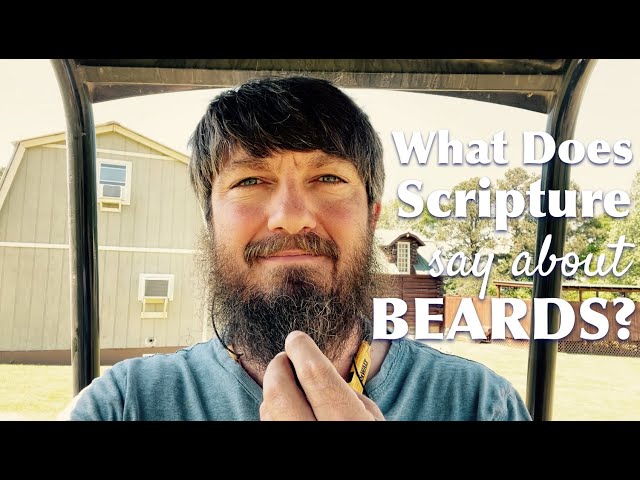
Have you ever wondered what the Bible has to say about facial hair? Whether you rock a full beard, a stylish mustache, or prefer the clean-shaven look, the topic of facial hair in the Bible is definitely intriguing. In this blog post, we will explore various passages and stories that touch on the subject of facial hair, shedding light on the significance and lessons we can learn from them.
Understanding what the Bible says about facial hair can offer valuable insights into cultural norms, personal grooming choices, and even spiritual symbolism. By delving into these biblical references, we can gain a deeper appreciation for the historical context and the relevance of facial hair in the lives of the people mentioned in the scriptures. So, let’s embark on this journey together and uncover the hidden gems of wisdom regarding facial hair in the Bible.
The Biblical Perspective on Facial Hair: Understanding What the Scripture Says
Facial hair has been a topic of discussion and debate for centuries, with varying opinions across different cultures and time periods. In the context of the Bible, there are references to facial hair that shed light on the significance and cultural practices associated with it.
One of the most well-known references to facial hair in the Bible is found in Leviticus 19:27, which states, “You shall not round off the hair on your temples or mar the edges of your beard.” This verse is part of a larger passage that outlines various laws and commandments for the Israelites, including guidelines on personal grooming and appearance.
In ancient Israelite culture, the beard was a symbol of masculinity, wisdom, and honor. Men were encouraged to let their beards grow and maintain them as a sign of respect and reverence. Shaving off or altering one’s beard was often associated with mourning, shame, or humiliation.
Another notable reference to facial hair can be found in the story of Samson in the book of Judges. Samson’s long hair was a source of his strength and power, and when it was cut off, he lost his supernatural abilities. While not specifically about facial hair, this story highlights the importance of physical appearance and grooming in the Bible.
In the New Testament, the apostle Paul makes a passing reference to facial hair in his first letter to the Corinthians. In 1 Corinthians 11:14, he writes, “Does not nature itself teach you that if a man wears long hair it is a disgrace for him?” Though this verse primarily addresses the issue of hair length, it indirectly touches on the topic of facial hair and personal grooming.
Overall, the Bible does not provide strict guidelines or commands regarding facial hair. Instead, it reflects the cultural norms and values of the time, where facial hair was often seen as a symbol of masculinity, strength, and honor. Today, attitudes towards facial hair vary widely, with some viewing it as a personal choice and others adhering to traditional beliefs and practices.
What does facial hair symbolize in the Bible?
In the Bible, facial hair often symbolizes masculinity, authority, and wisdom. For example, the Old Testament mentions various instances where men of importance or leadership, such as prophets or kings, are described as having facial hair. Additionally, in the New Testament, Jesus is often depicted with a beard, emphasizing his divine authority and maturity. Overall, facial hair in the Bible can represent maturity, strength, and a sense of being set apart for a specific purpose.
How does God feel about beards?
In the Bible, there are a few mentions of beards, but there is no direct commandment from God regarding them. However, beards were commonly worn in biblical times and were often seen as a symbol of masculinity and dignity. For example, in Psalm 133:2, it says, “It is like the precious oil on the head, running down on the beard, on the beard of Aaron, running down on the collar of his robes.”
One well-known instance involving beards is found in Leviticus 19:27, where it says, “You shall not round off the hair on your temples or mar the edges of your beard.” This was likely a cultural practice at the time, and some scholars interpret it as a way of distinguishing the Israelites from the surrounding nations.
Overall, the Bible does not specifically address how God feels about beards, so whether or not to have one is ultimately a personal choice.
What does the KJV Bible say about beards?
In the King James Version (KJV) of the Bible, there are mentions of beards in several verses. One notable reference is in Leviticus 19:27 which states, “Ye shall not round the corners of your heads, neither shalt thou mar the corners of thy beard.” This verse prohibits the trimming of the edges of one’s beard.
Another well-known mention of beards is found in Psalm 133:2 where it says, “It is like the precious ointment upon the head, that ran down upon the beard, even Aaron’s beard: that went down to the skirts of his garments.” This verse highlights the importance and symbolism associated with Aaron’s beard.
Moreover, in 2 Samuel 10:4-5, there is a story where King David’s servants’ beards were shaved off as an act of humiliation. This illustrates the significance of beards as symbols of masculinity and honor in biblical times.
Overall, in the KJV Bible, beards are often mentioned in the context of cultural practices, religious prohibitions, and symbolic significance.
What is the spiritual meaning of facial hair?
In the Bible, facial hair can hold spiritual significance as a symbol of maturity, wisdom, and authority. Facial hair is often associated with masculinity and strength in the Bible, reflecting a man’s identity and role in society. For example, in the Old Testament, many prominent figures such as Abraham, Moses, and Elijah are depicted with beards, signifying their connection to God and their leadership roles.
Additionally, facial hair can also symbolize dedication and commitment to one’s faith and beliefs. In some religious traditions, growing a beard is seen as a sign of devotion to God and adherence to certain principles or customs. Moreover, maintaining a well-groomed beard can demonstrate respect for oneself and others, reflecting a sense of order and discipline.
Overall, facial hair in the Bible is not simply a physical attribute but can carry deeper spiritual meanings related to maturity, wisdom, authority, devotion, and respect. By understanding these symbolic connotations, individuals can reflect on the significance of their own appearance and actions in relation to their faith journey.