
Have you ever struggled with feelings of guilt, shame, or unworthiness? Dive into Luke 15:11-32 with us in this Bible study to discover the incredible message of love, forgiveness, and redemption that it holds. This powerful parable of the Prodigal Son has the potential to transform your perspective on grace and mercy, offering you hope and reassurance in the midst of your struggles.
In this blog post, we will explore thought-provoking questions that will deepen your understanding of the story and its relevance to your own life. By reflecting on the themes of repentance, reconciliation, and the unconditional love of God, you will be equipped to experience a renewed sense of peace and freedom as you embrace the truth of your identity as a beloved child of God. Join us on this journey of discovery and allow the timeless wisdom of Luke 15:11-32 to illuminate your path towards spiritual growth and healing.
Exploring Luke 15:11-32: Studying Key Questions from the Bible
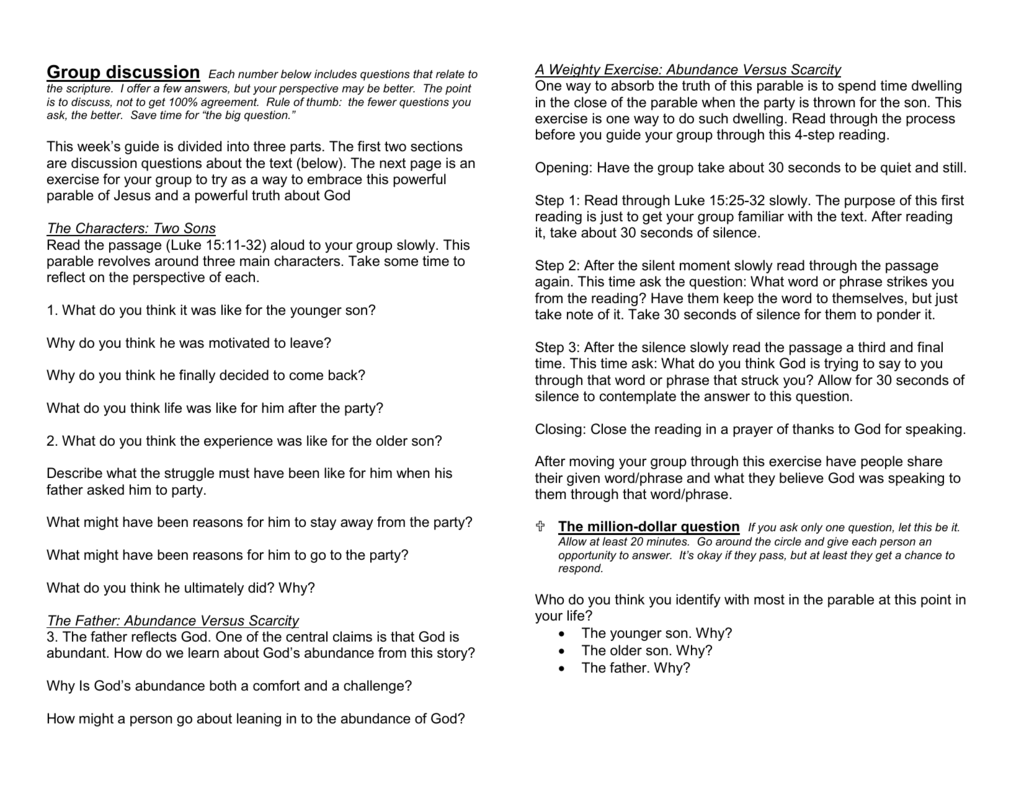
In Luke 15:11-32, we find the Parable of the Prodigal Son, one of the most well-known stories told by Jesus. This parable is rich in spiritual lessons and insights that can be applied to our lives today. Here are some Bible study questions to help you delve deeper into this passage:
1. Who are the main characters in this parable? What do they represent?
2. What led the younger son to ask for his inheritance early? What does this reveal about his character?
3. Describe the extravagant lifestyle the younger son lived while he had his inheritance. What consequences did he face as a result?
4. What was the turning point for the younger son? How did this lead him to repentance?
5. How did the father react when he saw his younger son returning home? What does this reveal about God’s unconditional love and forgiveness?
6. What was the older son’s reaction to his brother’s return? What does this teach us about jealousy and self-righteousness?
7. In what ways do we see the father’s mercy and grace displayed throughout this parable?
8. What is the significance of the celebration held upon the younger son’s return? How does this reflect God’s joy when sinners repent?
9. How can we apply the lessons from this parable to our own lives? In what ways can we show mercy, forgiveness, and love to others as God has shown to us?
10. Reflect on the themes of redemption, reconciliation, and restoration present in this parable. How do these themes point to the heart of the Gospel message?
By exploring these study questions and digging deeper into the Parable of the Prodigal Son, we can gain a greater understanding of God’s love, grace, and mercy towards His children.
What are the important lessons of the gospel Luke 15 11 32 )?
In the gospel of Luke 15:11-32, one of the important lessons is the parable of the Prodigal Son. This parable teaches us about God’s unconditional love and forgiveness towards those who repent and return to Him. It also highlights the themes of redemption, reconciliation, and the joy in heaven over one sinner who repents.
The story follows a son who demands his inheritance early, squanders it on reckless living, and ends up in a desperate situation. When he realizes his mistake and returns home, his father not only forgives him but also celebrates his return with open arms. This demonstrates the father’s unconditional love and willingness to forgive his repentant son.
Similarly, this parable reminds us that God is always ready to welcome back those who have strayed, no matter how far they have gone. It also challenges us to show forgiveness, compassion, and grace to others, just as God does for us. Ultimately, the parable of the Prodigal Son reveals the depth of God’s love for each of us and His desire for all to come to repentance and experience His redemption.
What is the main moral lesson of the story of the prodigal son?
The main moral lesson of the story of the prodigal son in the Bible is forgiveness. The father in the parable represents God, who forgives his wayward son and welcomes him back with open arms. This story teaches us about the boundless mercy and love of God, as well as the importance of forgiveness and reconciliation in our relationships with others. It also reminds us that no matter how far we may have strayed, we can always turn back to God and receive his forgiveness.
What is the main theme Jesus is communicating in Luke 15 11 32?
In Luke 15:11-32, Jesus communicates the main theme of God’s unconditional love and forgiveness through the parable of the Prodigal Son. The story illustrates how even when we stray away from God, He eagerly welcomes us back with open arms when we repent. The father’s compassionate response to both his repentant younger son and his resentful older son highlights the unconditional love and forgiveness that God offers to all who seek Him. This parable emphasizes the importance of repentance and restoration in our relationship with God.
What are the lessons from the prodigal son’s father?
The lessons from the prodigal son’s father in the Bible can be summarized as follows:
1. Unconditional Love: The father showed unconditional love towards his son, regardless of his mistakes and shortcomings. This teaches us the importance of forgiveness and grace towards others.
2. Patience and Hope: The father waited patiently and hopefully for his son to return, demonstrating the virtues of patience and trust in God’s timing.
3. Generosity and Compassion: Upon his son’s return, the father showed generosity and compassion by welcoming him back with open arms and celebrating his return. This teaches us to be compassionate and merciful towards others.
4. Humility: Despite being wronged by his son, the father demonstrated humility by not holding grudges or seeking revenge. This reminds us of the importance of humility and letting go of pride.
Overall, the prodigal son’s father serves as a powerful example of God’s unconditional love and forgiveness towards us, and challenges us to reflect His character in our relationships with others.